
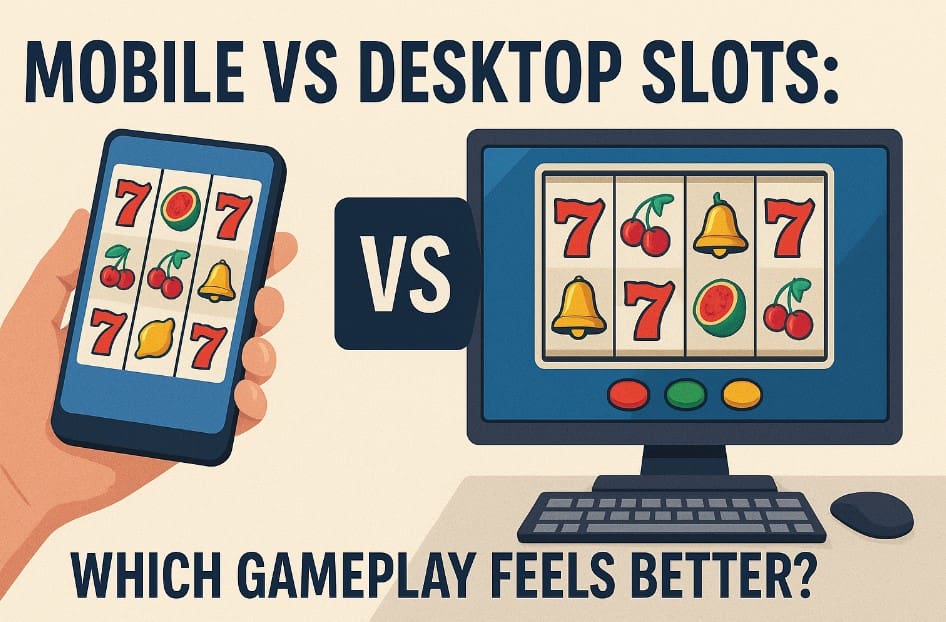
You can tell a lot about a player by where they spin. Some like to stretch out at their desk, double espresso in hand, watching those reels light up in full HD. Others? They’re spinning from the bus, one thumb on “Spin” and the other holding a takeaway cup that’s probably about to spill.
Both versions — mobile and desktop slot gameplay — offer the same basic thrill, but the feel is completely different. One fits in your pocket, the other feels like an event. It’s like comparing coffee-to-go with a slow café brew — same caffeine, different ritual.
Two Worlds, One Spin
Mobile Slots on the Move
Mobile slots were made for the restless. You could be waiting for a friend who’s “five minutes away” (they’re not), and suddenly you’re halfway through a bonus round. Everything about the mobile slot interface is designed for these spontaneous bursts of play: big buttons, responsive swipes, and fast load times.
Most run on HTML5 technology, so they slip smoothly into iOS or Android screens without clunky installs. You open the app or browser tab, and bam — reels spinning, sounds popping, and a mini Vegas in your palm.
The best part? You don’t need to plan it. You can just grab a quick session while the kettle boils. Sure, your thumb does most of the work, but somehow it feels satisfying — almost like flicking the lever of a classic slot, if you squint your imagination just right.
Desktop Slots: The Bigger Stage
Desktop slot gameplay, though, feels more like sitting down to play, not just pass the time. There’s a commitment to it — a mouse click instead of a thumb tap, a full monitor instead of a palm-sized screen. You’re not distracted by texts, battery life, or someone calling mid-spin.
It’s immersive. You’ve got the graphics dialed up, the bass in your headphones rumbling, and the animations looking crisp enough to make your GPU sigh. Developers can pack in more effects, wild transitions, and layered soundtracks without worrying about a small screen or energy drain. It’s like watching a blockbuster instead of a trailer.
And let’s be honest — nothing beats a giant screen when those jackpot reels slow down. You feel the suspense in a way mobile just can’t match.
The Real Differences in Feel and Flow
Touchscreens vs. Clicks
The way you interact with the game changes everything. Touchscreens make it personal — you’re literally touching the reels. There’s a kind of tactile thrill to it, especially when you double-tap to spin faster. But touchscreens also have that little gremlin moment where your thumb slips, and suddenly you’ve hit “max bet” instead of “spin.” Ouch.
Desktop slots are more controlled. Your mouse gives you precision — betting, autoplay, switching views — all easy to navigate. You can hover for info, right-click to check paytables, and never worry about smudged screens. It’s tidy. Some say it feels less natural than tapping a screen, but for others, it’s pure focus.
It’s a bit like the difference between texting and typing: both get the message across, but one’s casual and the other feels serious.
Graphics, Power, and Performance
Let’s talk visuals. Desktop slots are show-offs — and rightfully so. They take full advantage of that graphics quality boost, with rich animations, 3D characters, and background sequences that look like mini movies. Load times are short, and the performance is buttery smooth, especially on a solid connection.
Mobile slots, meanwhile, are more about agility. Developers tone down textures and effects so everything runs silky even on mid-range phones. But don’t be fooled — modern smartphones have some serious muscle. The newer devices can run detailed slot environments at 60 frames per second without breaking a sweat.
Still, if you’ve ever switched from mobile to desktop, you know that first “wow” when you see the same game in ultra detail. It’s like going from watching football on your phone to seeing it on a cinema screen.
Loading Times and Responsiveness
You’d think mobile would lag behind, but surprisingly, mobile slots load fast. That’s because they’re built for quick access — small file sizes, optimized assets, and clever caching tricks. Perfect for that “just one spin before bed” mindset.
The catch? Wi-Fi and mobile data can be fickle. A weak signal mid-bonus round can make your heart drop faster than a losing spin. Desktops, with steady broadband and no battery anxiety, tend to offer a smoother, uninterrupted rhythm. You can sit back, let the reels roll, and never worry about someone calling right when you hit free spins (which, let’s admit, happens every time).
Convenience: Pocket Freedom vs. Seated Focus
The Joy of Playing Anywhere
Mobile slots win on pure convenience. You could be in line for groceries, stretched on the couch, or halfway through a Netflix episode — your casino’s always in your hand. That “play anywhere” vibe is a big part of the mobile slot experience.
It’s not just about the games themselves, either. Mobile casino apps now sync accounts, bonuses, and even achievements across devices. You start a game on your phone, then continue on your tablet. It’s seamless.
There’s something nice about knowing that your favorite slot is literally one tap away, even if you never actually win while waiting for your laundry cycle to finish.
The Stationary Comfort of Desktop
Desktop slots feel more intentional — you don’t stumble into them. You decide to play. You grab your drink, sit back, and maybe even mute your phone. There’s a kind of ritual in it, especially for long gaming sessions.
The bigger screen turns even simple games into cinematic experiences. You can appreciate details — the shimmer of symbols, the depth in 3D reels, the layers of music and effects. It’s immersive, almost meditative. You can’t play while walking your dog, but you’ll enjoy it more when you do sit down.
Variety, Features, and Flavor
Game Libraries Across Devices
Once upon a time, mobile slots were the “lite” versions. Fewer features, shorter animations, sometimes even missing bonus rounds. But mobile vs. desktop slots have almost equal footing now. Developers launch their games simultaneously on both, and HTML5 ensures they scale perfectly.
That said, desktop casinos still house a few relics — old Flash-based slots or classic three-reel games that never got mobile makeovers. So if you’re into vintage machines or niche themes, the desktop might still have hidden treasures mobile can’t load.
On mobile, everything’s slick and compact. Buttons tuck away neatly, menus slide in and out, and info panels appear with a tap. It’s built for fluidity, not clutter.
Social Play and Community Vibes
Here’s where mobile shines: social features. Mobile casinos love to weave in leaderboards, tournaments, and notifications. One moment you’re casually spinning, the next you’re in a daily challenge because an app told you “3 friends are already playing.” It’s fun, a little competitive, and sometimes addictive in that sneaky mobile way.
Desktop players, though, often prefer the quieter experience. You’ll find tournament lobbies and chat windows, sure, but they’re tucked away. It’s more about the reels than the reminders. If you’re the kind of player who likes zoning out, desktop slots are the peace-and-quiet version of the casino.
Devices and Battery Life: The Practical Stuff
 The Battery Struggle is Real
Ask any mobile player who’s hit free spins at 15% battery — it’s pure stress. Between graphics, sound, and internet use, mobile slots drain power fast. Some casino apps offer battery-saver modes, dimming the screen and simplifying animations, but it’s still a constant battle between luck and low battery.
It’s fine for quick sessions, but if you plan to chase jackpots for hours, keep that charger close.
Desktop Power and Stability
Desktops, meanwhile, never complain. They stay cool, consistent, and ready for long sessions. You can keep a dozen tabs open — a slot here, a YouTube playlist there — and everything hums along happily. It’s the kind of stability mobile gamers can only dream of when their phone starts heating up mid-bonus round.
Security and Reliability
Playing Safe on Mobile
Mobile casinos have stepped up their security game big time. Most offer biometric login, two-factor authentication, and strict encrypted payments. iOS and Android stores only list licensed operators, so it’s hard to stumble into something shady.
The real issue? Public Wi-Fi. It’s tempting to spin while sipping coffee in a café, but unsecured networks can open cracks for data leaks. Smart players use mobile data or VPNs — or just wait until they’re home.
Why Desktops Still Feel Safer
On desktop, you can see everything — the SSL certificate, the full URL, your antivirus humming in the background. You can run VPNs, set up firewall rules, and control your environment. It’s that extra visibility that makes desktop feel a little safer for handling deposits and withdrawals.
Mobile security’s solid, no doubt. But if you’re someone who likes seeing the locks and padlocks, desktop gives peace of mind.
So, Which One’s Better?
Honestly, it depends on your rhythm.
If you love the idea of quick spins while commuting or sneaking in a bonus round during lunch, mobile slots fit like a glove. They’re personal, playful, and ready whenever you are. You can jump into a mobile casino game at a moment’s notice and still feel the full excitement — even if your phone’s at 12%.
But if you like a slower pace — a session where you savor every spin, hear every chime, and lose yourself in the graphics — desktop slots are where the magic lives. You get the full atmosphere, the steady performance, and zero interruptions.
At the end of the day, the difference isn’t just technical. It’s about intention.
Mobile fits the pauses between life’s moments. Desktop creates the space for them.
And honestly, there’s no rule saying you can’t have both. Spin on your phone when you’re out and on your computer when you’re home. The reels don’t care — they spin the same way, wherever you are. It’s you who decides how the story feels.