
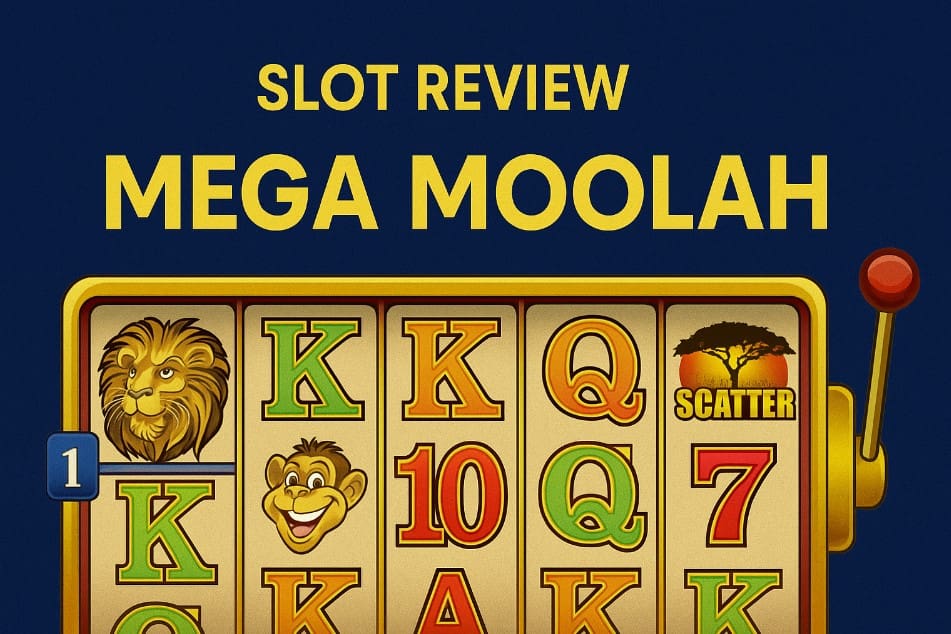
Mega Moolah has always had a slightly odd reputation in online gambling circles. People talk about it the way their dad talks about a long-shot horse that once paid for a house. Half disbelief, half superstition. It sits there in casino lobbies looking almost harmless, quietly chewing through thousands of spins worth a few cents at a time. Nothing dramatic happens. Until it does.
Then a number explodes across the screen. Someone freezes. Someone else checks their internet connection. Compliance teams wake up. News outlets start calling. And Mega Moolah adds another absurd figure to its jackpot history.
None of this is mythmaking. The payouts are documented, regulated, and paid in full. That’s why the slot still gets whispered about instead of ignored, even all these years later.
How Mega Moolah quietly became the progressive benchmark
When Microgaming launched Mega Moolah in the mid 2000s, progressive jackpots already existed, but they were usually awkward, isolated things. One machine, one venue, limited growth. Mega Moolah flipped that by linking casinos together into a single jackpot pool, which sounds obvious now, but at the time felt clever and risky.
What’s funny is that the game never acted like it was carrying something special. The safari theme leaned cartoonish. Giraffes smiled. Lions bounced. You didn’t feel like you were walking into a high-stakes environment. That unintimidating look pulled in players who might never chase a jackpot on purpose.
Little bets stacked up. Millions of spins accumulated quietly. And the numbers… they just kept moving.
What actually happens behind a Mega Moolah jackpot
Every qualifying spin drops a microscopic amount into four pots: Mini, Minor, Major, and the one everyone cares about, the Mega. Over time, the Mega pot becomes enormous simply through volume. Nobody “pushes” it there. It crawls.
Once the jackpot is triggered, the event itself is anticlimactic. No long bonus round. No cinematic buildup. One normal spin lands slightly better symbols than usual, and suddenly the screen doesn’t seem real anymore.
From there, everything gets serious. Verification, audits, regulator oversight, payment checks under bodies like the Malta Gaming Authority and the UK Gambling Commission. That slow, boring compliance process is actually what makes Mega Moolah trustworthy. Casinos don’t rush to process payouts that big. They triple-check because they have to.
Early wins that made people pay attention
In the early years, Mega Moolah jackpots were impressive but not outrageous. A couple million here, a few million there. Enough to raise eyebrows but not enough to dominate headlines.
The turning point came when payouts crossed into “wait, what?” territory. Eight figures didn’t just surprise players, they surprised the industry itself. Forums lit up. Screenshots circulated. Skeptics started running out of angles to argue from.
Once Microgaming began publishing verified payout stats openly, the slot crossed an invisible line. Mega Moolah wasn’t lucky anymore. It was statistically inevitable.
The Mega Moolah wins everyone remembers
A few Mega Moolah jackpots changed the tone permanently. After these, nobody asked whether the game could do it again. The question became when.
- A British soldier won roughly €13.2 million in 2015 on a modest online spin, setting a world record for online slot payouts.
- A Belgian player later surpassed that with a jackpot north of €15 million.
- In 2018, a German player pushed things into uncharted territory with a Mega Moolah payout of around €18.9 million, still one of the biggest online slot wins ever recorded.
- Multiple other wins later crossed €10 million without much fanfare, which is probably the strangest part of the story.
When ten million stops shocking people, a slot has done something unusual.
The small human moments behind massive payouts
What rarely gets mentioned is how deeply awkward the first few minutes after a Mega Moolah win tend to be. Winners almost always assume something has gone wrong.
One player reportedly refreshed their browser repeatedly, convinced the number was a loading error. Another shut their laptop entirely and came back an hour later, half expecting the win to be gone. A few called customer support not to celebrate, but to ask whether it was safe to keep the balance open.
And then comes the strange waiting period. No confetti. No instant withdrawal. Just emails, identity checks, paperwork. The jackpot is real, but it doesn’t feel real yet. For some winners, that waiting phase was more stressful than the years they spent spinning casually.
After payment, reactions vary wildly. Quiet retirements. Charitable donations. Low-profile business launches. One common thread though: nobody claims they sensed it coming.
When Mega Moolah became officially record-breaking
 Mega Moolah didn’t just break casino records. It broke into Guinness World Records, which matters more than it sounds. Guinness recognition forced outsiders to acknowledge that these were not promotional stories or marketing spin.
What surprised many observers was how small some of the qualifying bets were. Mega jackpots triggered on spins that wouldn’t cover a coffee in most cities. That detail alone rewired expectations around online slot jackpots.
After that point, Mega Moolah wasn’t competing with other slots. It was competing with lotteries, and occasionally outshining them.
How Mega Moolah reshaped online casino strategy
Before Mega Moolah, jackpots were often decorative features. After Mega Moolah, they became foundations. Casinos realized that one global progressive could drive loyalty longer than any short-term bonus ever could.
Developers tried to replicate the formula. Many failed. Some launched enormous jackpots but couldn’t maintain liquidity or trust. Others hit once and never again. Mega Moolah just kept doing what it always did, slowly, predictably, and occasionally explosively.
It also flipped player psychology. High rollers stayed away because bet size didn’t improve odds. Casual players leaned in because participation felt possible. That inversion is rare, and it stuck.
Playing Mega Moolah without illusions
Mega Moolah feels slower today, especially compared to feature-heavy modern slots. That’s not a flaw. It’s the cost of chasing something this big.
Players who enjoy Mega Moolah tend to accept a very simple reality: most sessions will be dull. Occasionally something small happens. Once in a long while, history happens.
A few grounded habits help:
- Keeping stakes comfortable enough to play without tension
- Accepting that any qualifying bet is equally valid
- Choosing licensed casinos purely for peace of mind
- Treating long dry spells as the default, not the exception
- Knowing when to stop spinning without feeling cheated
None of this improves odds. It just keeps expectations sane.
Why Mega Moolah is still here
Slots usually age poorly. Themes get dated. Mechanics feel stale. Mega Moolah survives because it never pretended to be clever. It had one ambition: build the biggest progressive jackpot possible and pay it out properly.
Microgaming rarely interfered with that mission. Infrastructure updates happened quietly. The math stayed consistent. The jackpot reset and climbed again.
That restraint turned out to be its strongest feature.
What Mega Moolah ultimately represents
Mega Moolah’s legacy isn’t only about numbers, or biggest Mega Moolah winners lists, or headlines. It’s about trust built slowly over years. Players don’t ask whether Mega Moolah jackpots are real anymore. They ask who gets the next one.
That expectation is heavy, but Mega Moolah carries it well. The counter keeps ticking. The spins keep landing. Somewhere, someone is clicking “spin” without thinking twice.
And eventually, one ordinary moment won’t stay ordinary at all.